
The Future of Interoperable Civic Infrastructure
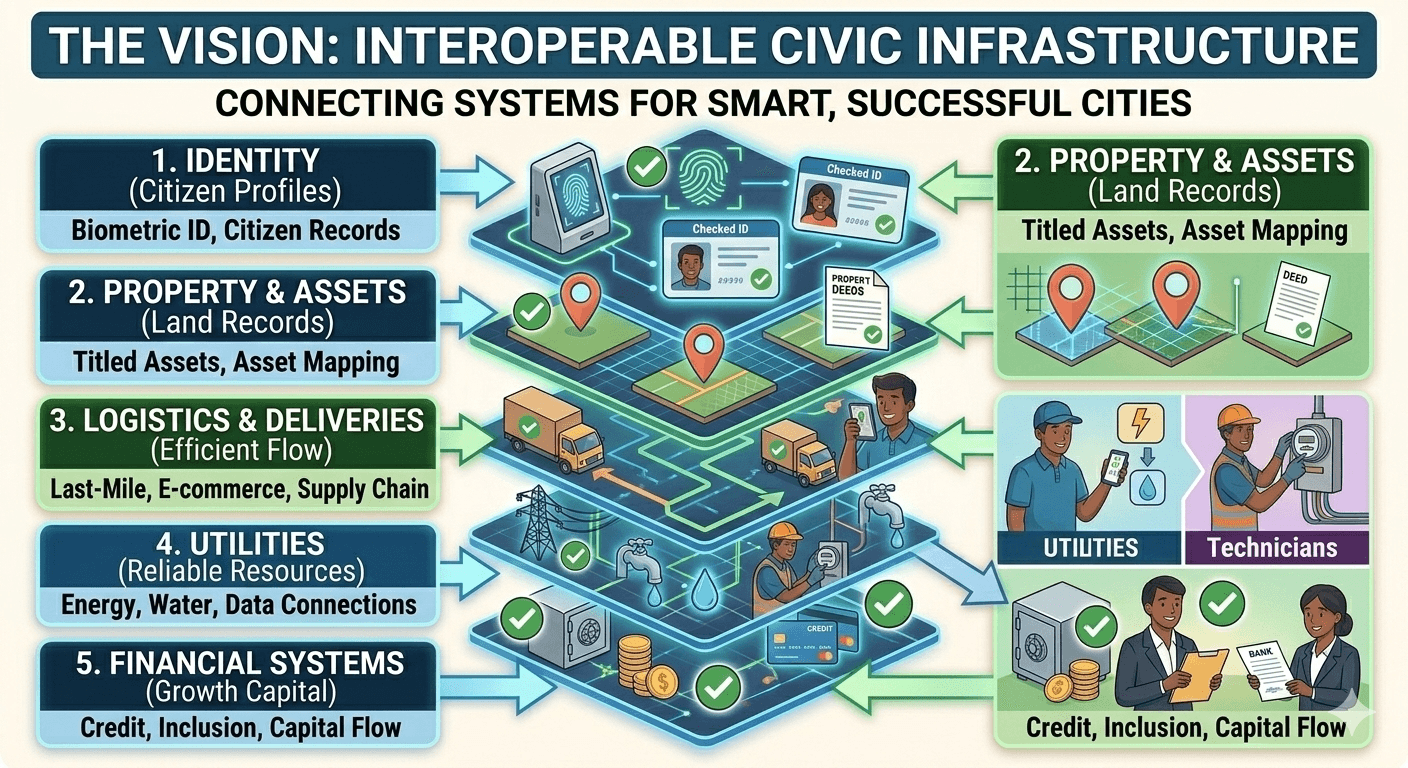
Digital transformation is often described in terms of platforms and applications. But beneath applications lie foundational systems.
Introduction: Infrastructure as a Stack
Modern economies operate as interconnected systems.
Identity systems connect to banking.
Banking connects to payments.
Payments connect to commerce.
Commerce connects to logistics.
Location underpins all of them.
The future of civic infrastructure lies in interoperability.
Foundational Registries as Public Goods
The World Bank and OECD emphasize that foundational registries—identity, land, business, and address—act as public goods.
When standardized and interoperable:
- Agencies share data securely
- Redundancy decreases
- Service delivery accelerates
Address infrastructure forms one of the core layers in this stack.
API-Driven Governance
As governments modernize, APIs increasingly connect:
- Civil registries
- Tax authorities
- Social protection databases
Municipal services
Without standardized address referencing, integration becomes brittle.
Interoperability requires consistent location identifiers.
Private Sector Integration
E-commerce platforms, fintech companies, insurers, and logistics firms benefit from:
- Stable, machine-readable address systems
- Clear household-level references
- Persistent identifiers over time
When public address infrastructure is robust, private innovation accelerates.
Urbanization and Digital Public Infrastructure
Countries investing in digital public infrastructure increasingly recognize that identity alone is insufficient.
Location, when standardized and integrated, enables:
- Geographic targeting of subsidies
- Smart city planning
- Efficient disaster response
- Accurate property taxation
Interoperable civic infrastructure depends on location certainty.
Conclusion: Completing the Stack
Digital transformation is often described in terms of platforms and applications.
But beneath applications lie foundational systems.
Address infrastructure—standardized, interoperable, and persistent—completes the civic stack required for inclusive digital economies.