
Our Blog

Designing for Permanence: What Makes an Address System Future-Proof?
A future-proof address system ensures that as innovation accelerates, the spatial foundation of economic and administrative life remains stable.
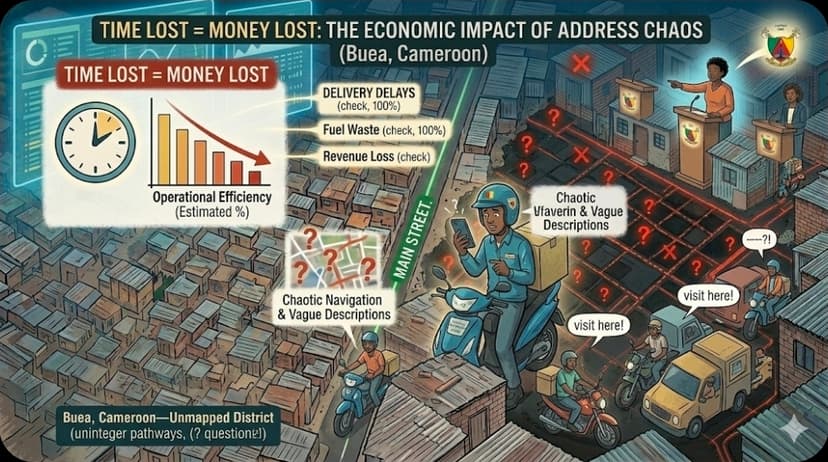
The Cost of Ambiguity: How Inaccurate Addressing Erodes Economic Efficiency
In an era where digital systems promise speed and automation, inconsistent addressing becomes increasingly costly.
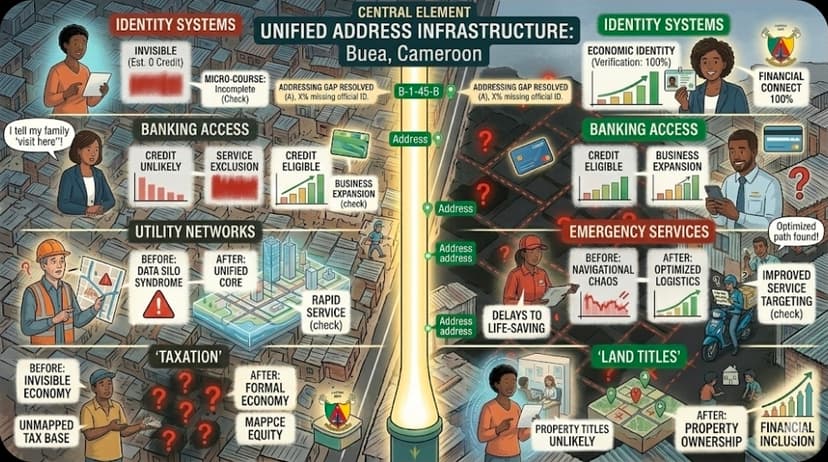
The Administrative Backbone of Prosperity: Address Systems as Digital Public Infrastructure
In an increasingly digital economy, prosperity depends not only on connectivity—but on precision.
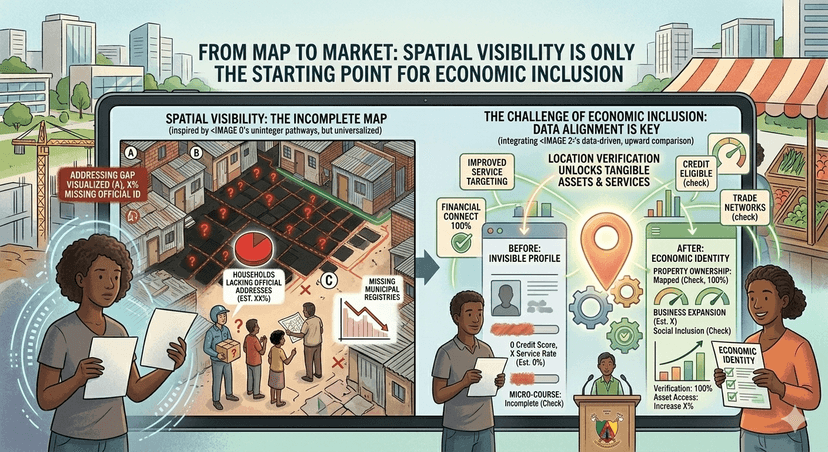
From Map to Market: Why Spatial Visibility Does Not Equal Economic Inclusion
Bridging that gap demands attention not merely to where buildings stand—but to how location is institutionally defined, standardized, and shared.
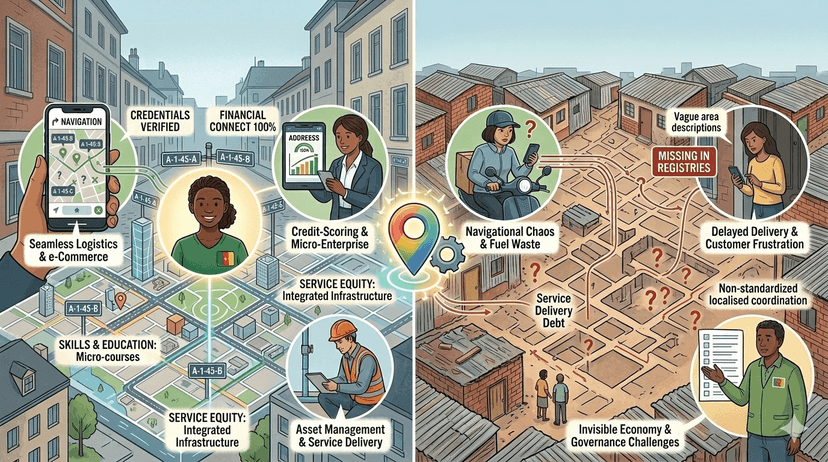
The Economic Geography of Opportunity: How Address Precision Shapes Mobility
In an era defined by urbanization, digitization, and data-driven governance, address precision becomes a quiet but powerful determinant of economic geography.
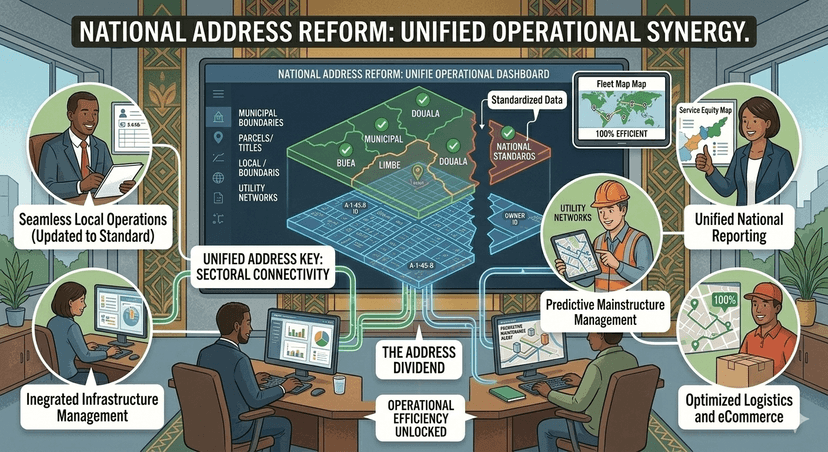
The Governance Challenge of National Address Reform
Failure to maintain data integrity results in gradual system decay.
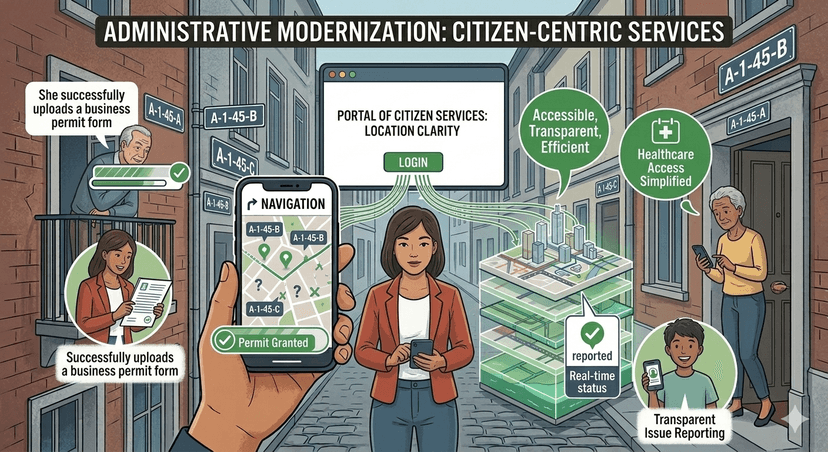
Administrative Modernization Begins With Location Clarity
Administrative transformation begins not with portals, but with structured foundational systems—among them, addressing.

Why Delivery Apps Should Care About Public Address Systems
Delivery platforms—food, parcels, groceries—have expanded rapidly across both developed and emerging economies.

The Governance Challenge of National Address Reform
Without coordination, technical design cannot achieve systemic coherence.
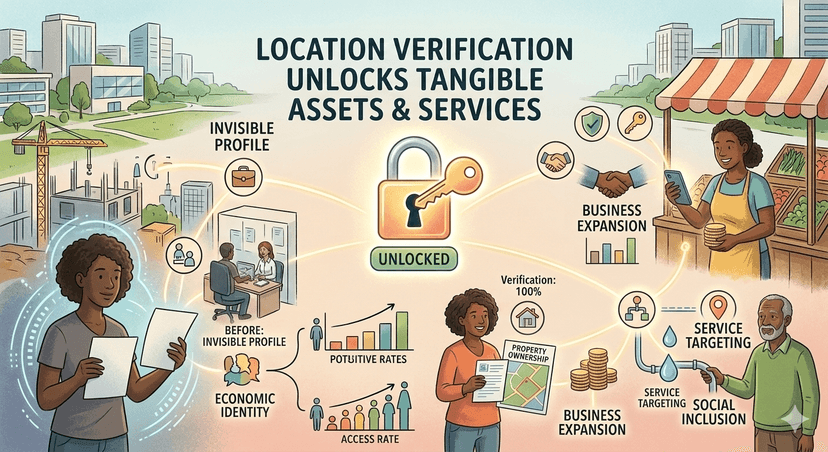
Why Location Is a Core Layer of Economic Identity
Identity answers “WHO.” Location answers “WHERE.” Economic participation requires both.
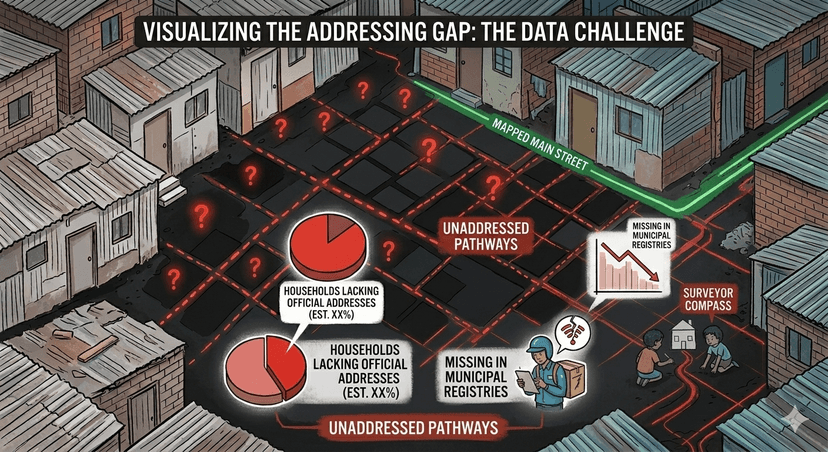
Informal Settlements and the Addressing Gap
Urban inclusion requires more than housing upgrades.
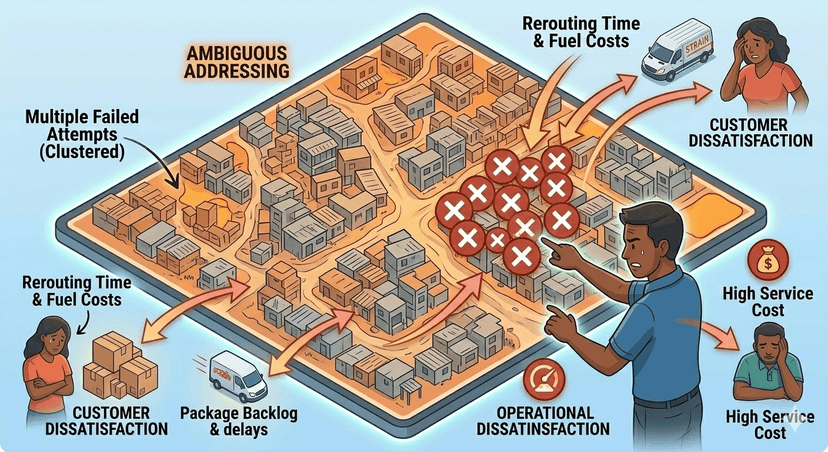
The Cost of Ambiguous Location Data
Precision as Economic Efficiency Ambiguous location data is not merely inconvenient.
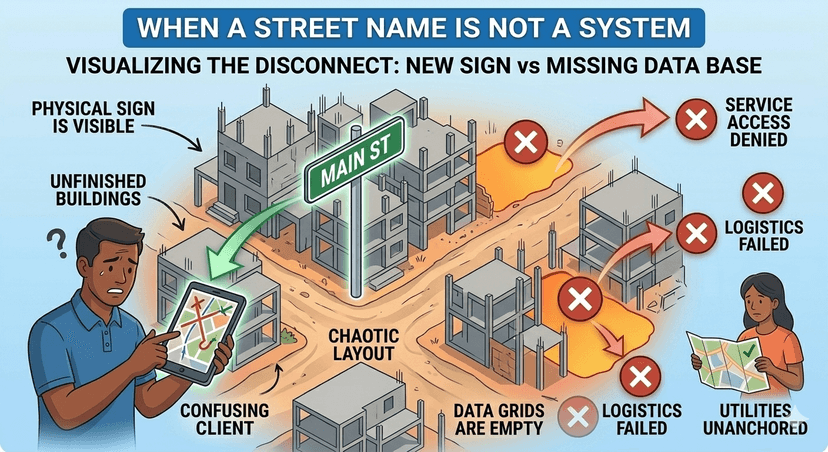
When a Street Name Is Not a System
Without structured numbering, registry integration, and institutional alignment, a street name remains a label—not infrastructure.
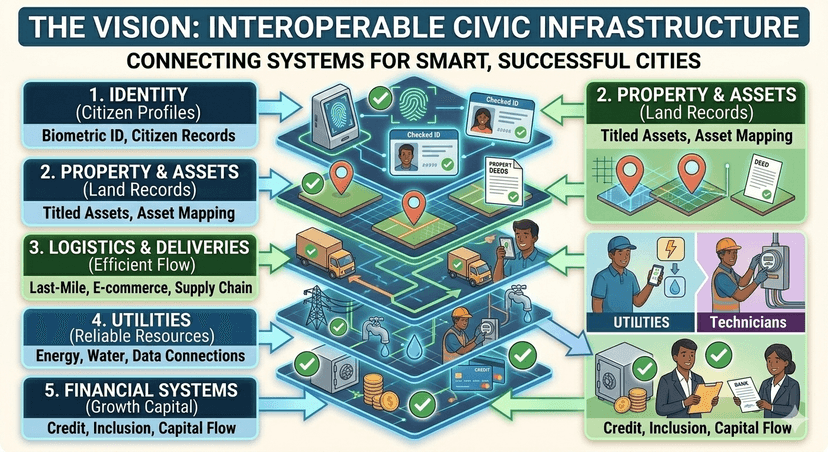
The Future of Interoperable Civic Infrastructure
Digital transformation is often described in terms of platforms and applications. But beneath applications lie foundational systems.
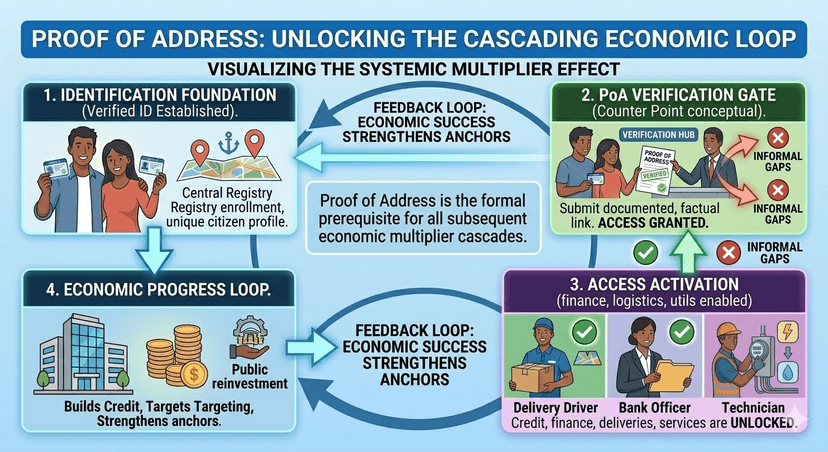
Proof of Address: The Small Requirement with Large Consequences
Proof of address appears routine. Yet behind this requirement lies a foundational assumption: that location infrastructure is stable and accessible.
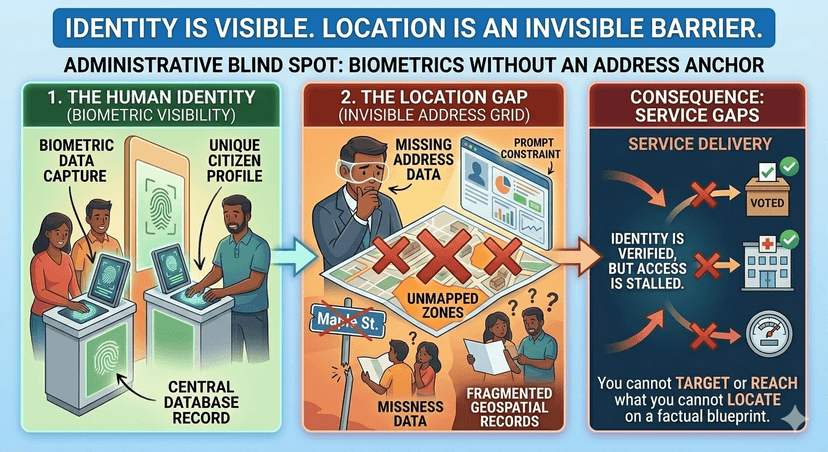
The Administrative Blind Spot in Emerging Economies
But without reliable address infrastructure, administrative systems operate with structural blind spots.
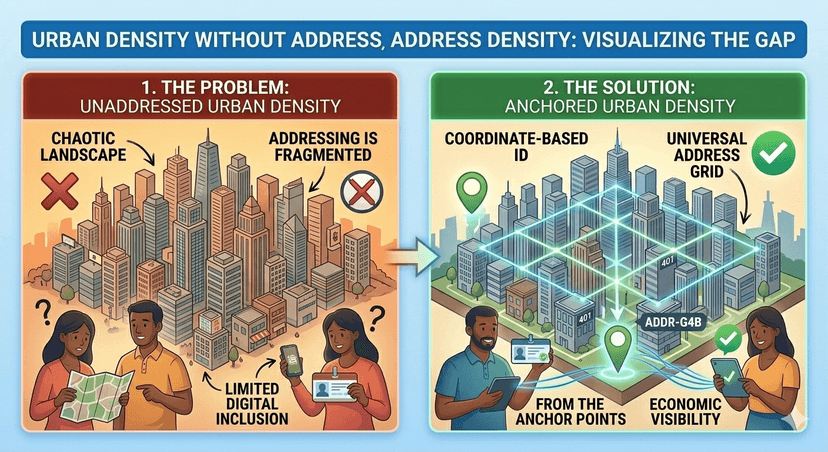
Urban Density Without Address Density
Without proportional growth in address density, administrative systems struggle to keep pace with the cities they serve.
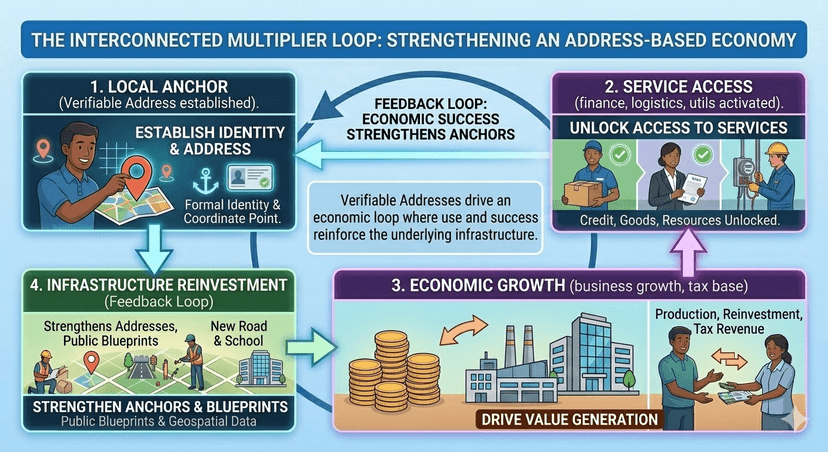
The Economic Multiplier Effect of Address Certainty
Unlike roads or power grids, address systems rarely appear in capital expenditure headlines.
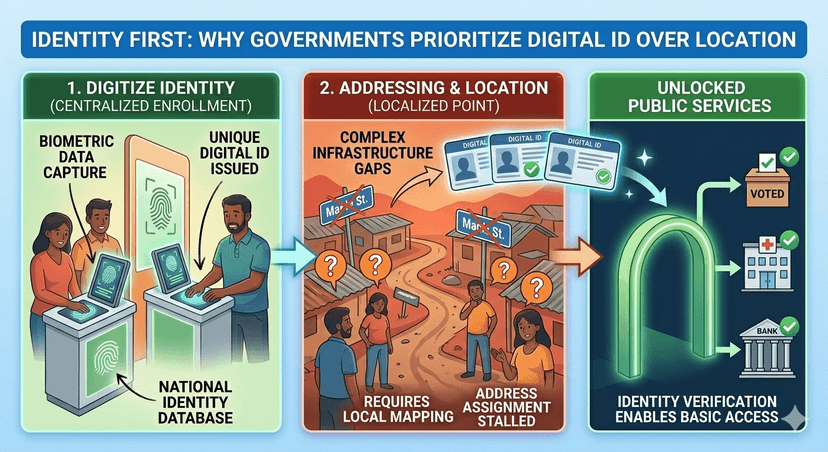
Why Governments Digitize Identity Before Fixing Location
Digital identity is foundational. But without parallel modernization of location infrastructure, governments build half the architecture required for full digital interoperability.
The Quiet Infrastructure Behind Every Delivery, Loan, and Utility
Addressing rarely appears in headlines. It is not politically visible like highways or bridges. Yet it underpins every transaction tied to physical location.
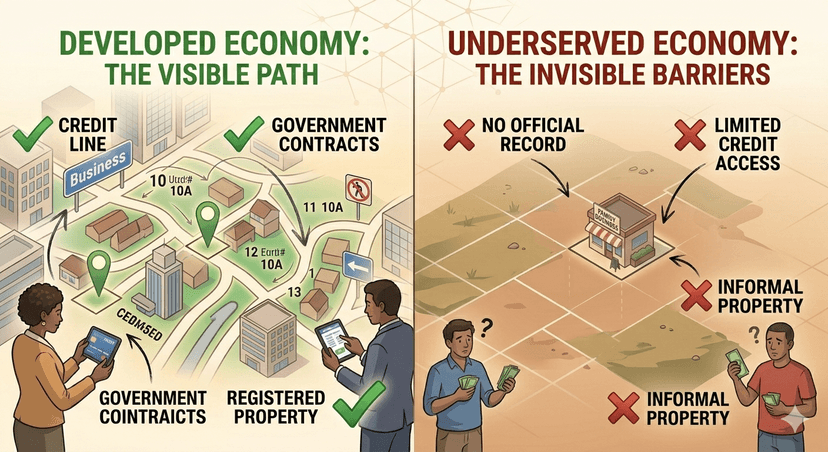
Addressing Inequality Is Infrastructure Inequality
Addressing rarely appears in headlines. It is not politically visible like highways or bridges. Yet it underpins every transaction tied to physical location.
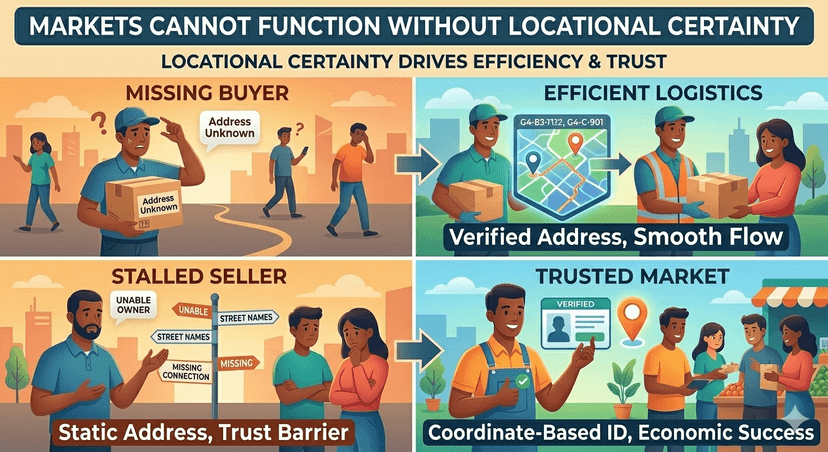
The Household as the Smallest Unit of Infrastructure
Addressing systems that do not recognize households structurally misalign infrastructure with lived economic reality.
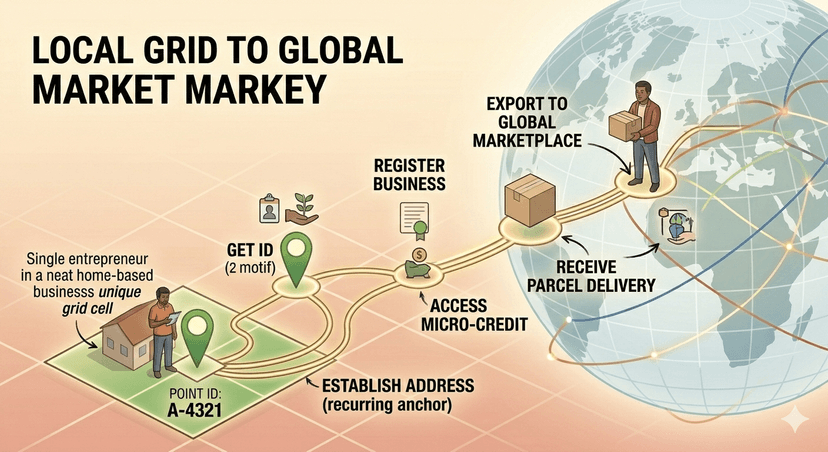
Why Mapping the World Did Not Solve Addressing It
Addressing is not a cartographic problem alone. It is an administrative and economic one.
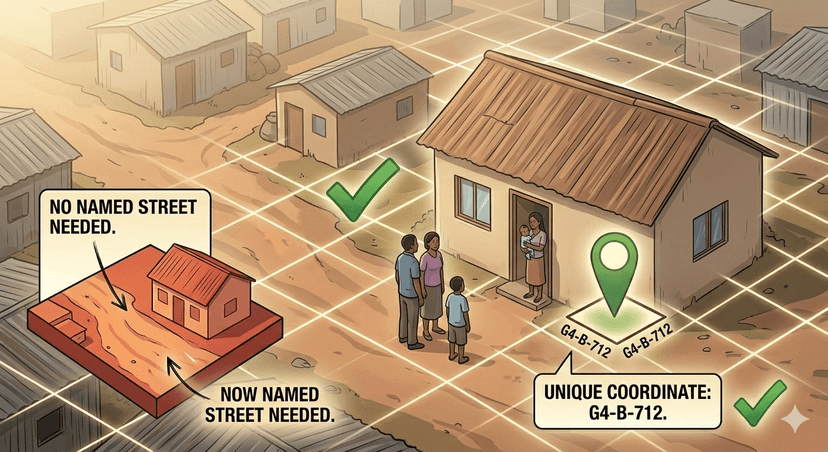
From Village Names to Digital Records: The Transition No One Designed
Until that transition is deliberately addressed, digital inclusion efforts will continue to encounter structural friction rooted not in technology, but in location referencing.
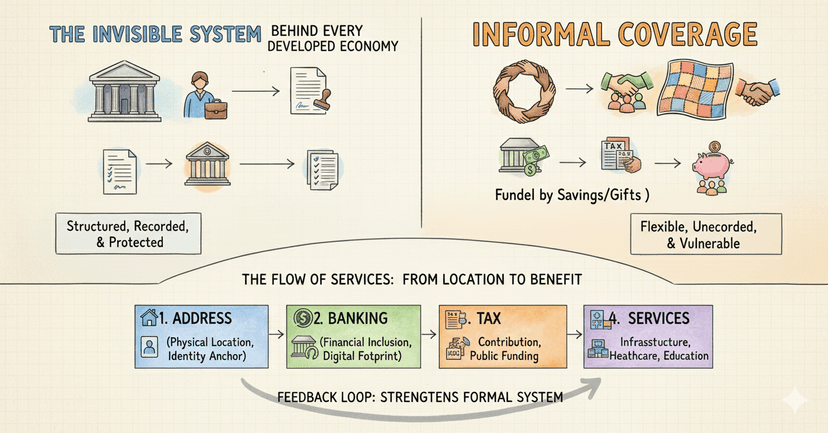
Why Renters Bear the Highest Cost of Address Insecurity
Urban housing policy often focuses on affordability, tenure, and supply. Addressing rarely enters the discussion. Yet for renters, stable and distinct locational recognition can determine access to credit, utilities, and public services.
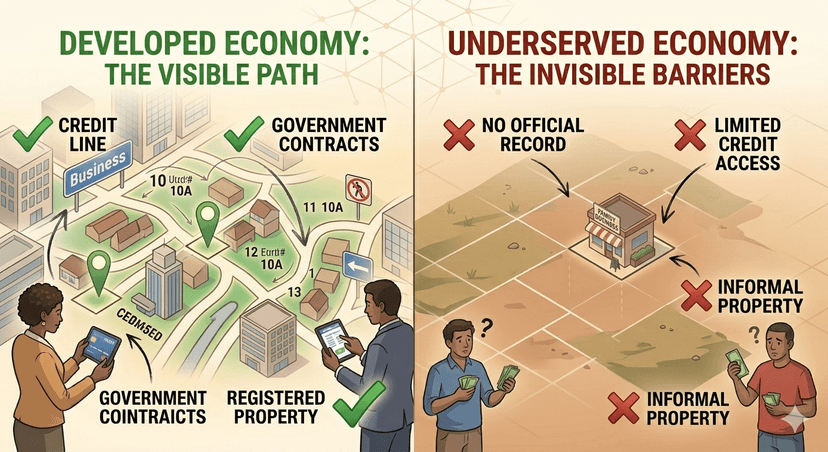
Why Informal Addresses Keep Families Informal
When households cannot be consistently recognized in administrative systems, their economic activity remains partially invisible.
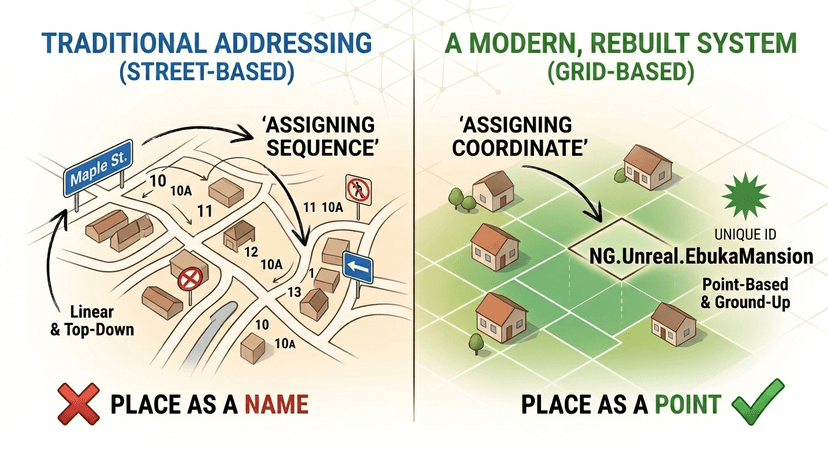
Why Africa, Asia, and Latin America Can’t Fully Digitize Without Fixing Addressing First
Without reliable addressing infrastructure, digitization risks reinforcing exclusion rather than resolving it.
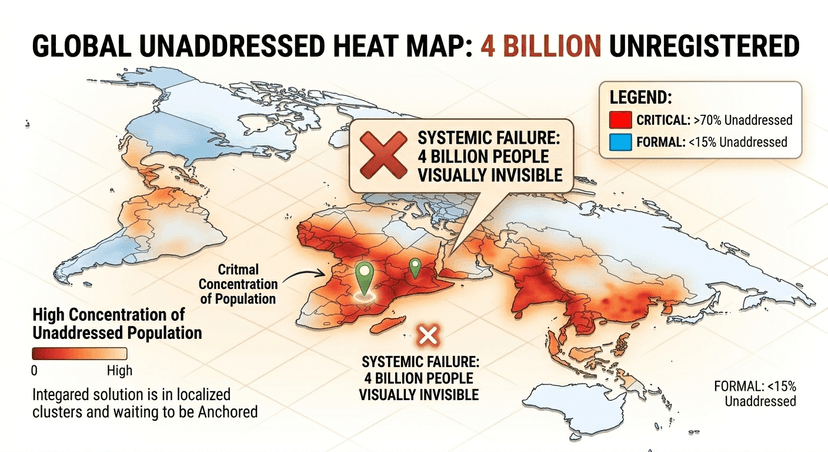
4 Billion People Live Without a Formal Address. That’s Not a Statistic—It’s an Economic Emergency
Treating address absence as a marginal issue underestimates its cumulative impact. At scale, it constrains financial inclusion, urban productivity, and state capacity.
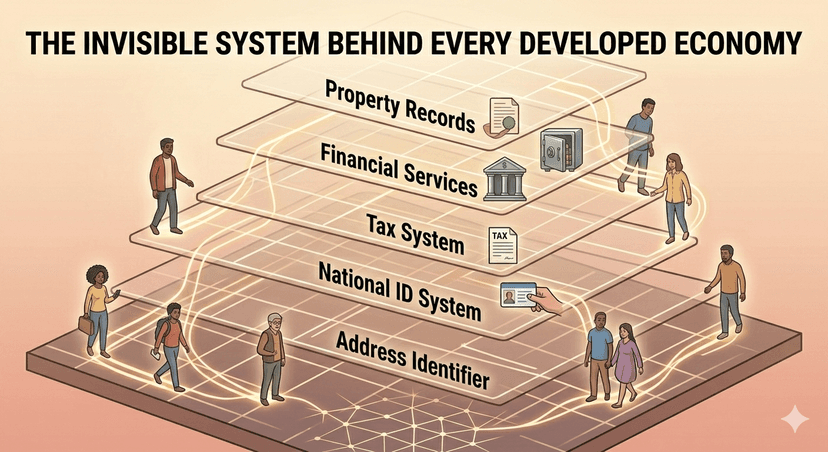
The Invisible System Behind Every Developed Economy—And Why Billions Still Don’t Have It
The most powerful infrastructure is often the least visible. Robust address systems underpin developed economies, yet remain incomplete across much of the world.
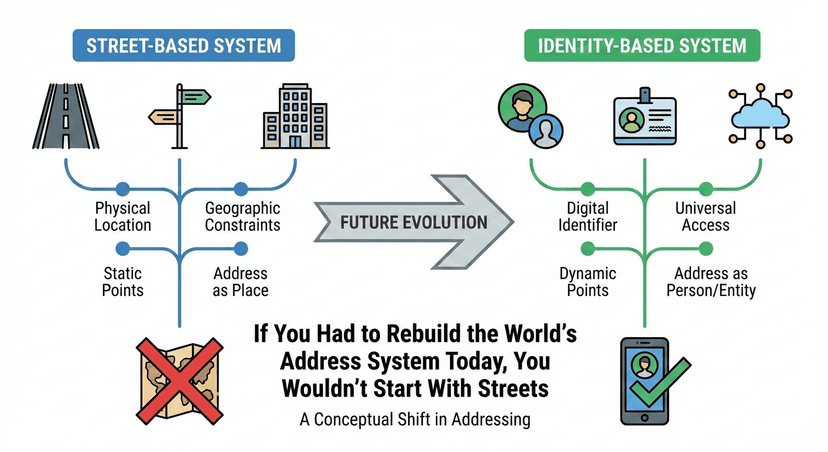
If You Had to Rebuild The World's Address System Today, You Wouldn’t Start With Streets
The question is not whether existing systems can be extended or digitized, but whether their foundational assumptions align with the realities of modern economies.

Protect The Children
Our kids are our future