
Informal Settlements and the Addressing Gap
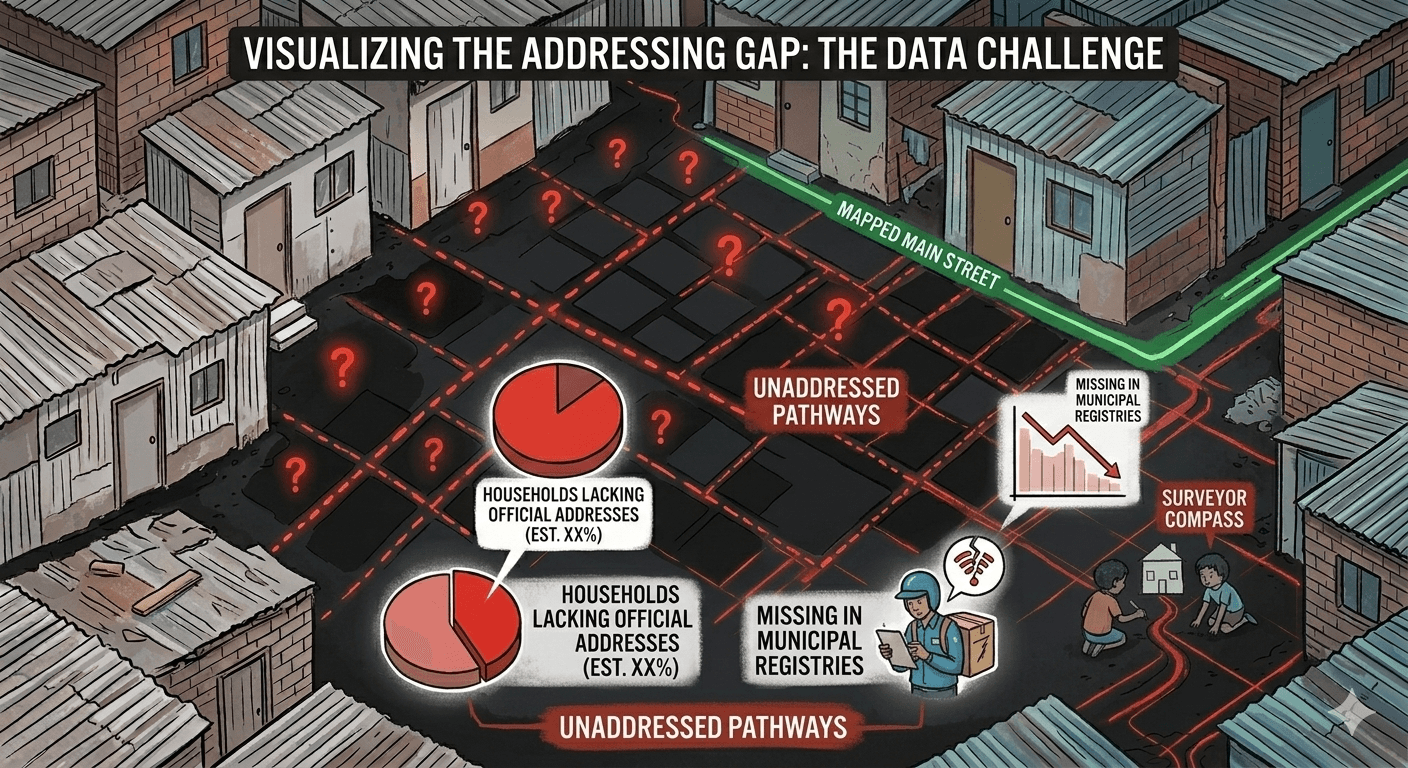
Urban inclusion requires more than housing upgrades.
Introduction: Growth Outside the Grid
UN-Habitat estimates that a significant portion of urban growth occurs in informal settlements.
These areas are characterized by:
- Incremental construction
- Irregular plot layouts
- Limited formal documentation
Address systems often lag behind this growth.
Recognition and Inclusion
Without formal addressing:
- Residents may lack recognized proof of residence
- Businesses may remain unregistered
- Services may be delivered inconsistently
Location invisibility contributes to administrative invisibility.
Service Delivery Challenges
Utilities face difficulties when:
- Structures lack official numbering
- Boundaries are unclear
- Records do not match physical reality
- Emergency services may rely on informal guides or local knowledge.
Density amplifies the risk of delay.
Data and Planning Gaps
If informal settlements are poorly referenced:
- Census data may undercount households
- Infrastructure demand may be underestimated
- Budget allocation may skew elsewhere
The absence of granular location data limits evidence-based planning.
Pathways Forward
Addressing informal settlements does not require immediate land regularization.
It requires:
- Household-level referencing
- Standardized numbering logic
- Institutional recognition
Location infrastructure can precede broader formalization processes.
Conclusion: Bridging the Gap
Urban inclusion requires more than housing upgrades.
It requires recognition within administrative systems.
Address infrastructure plays a central role in that recognition.