
The Governance Challenge of National Address Reform
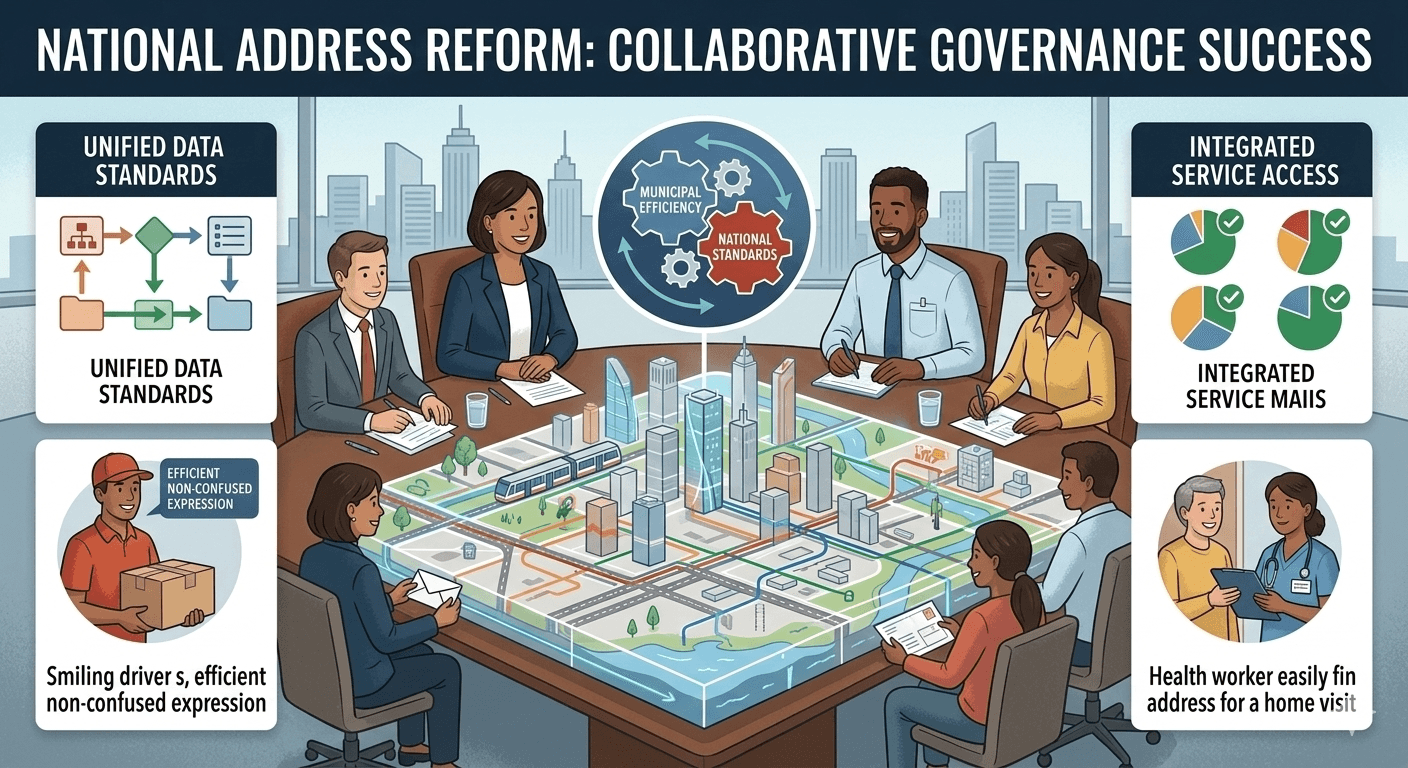
Without coordination, technical design cannot achieve systemic coherence.
Introduction: Reform Is Not Just Technical
Designing a national address system is often perceived as a technical task—mapping streets, numbering buildings, digitizing records.
In practice, it is a governance challenge.
Address systems intersect with:
- Municipal authority
- Land administration
- Taxation
- Urban planning
- Emergency services
Coordinating these domains requires institutional alignment, not just technical design.
Fragmented Authority
In many countries, responsibility for addressing is divided among:
- Municipal governments (street naming)
- Land registries (parcel identification)
- Postal authorities (delivery codes)
- Utility providers (service locations)
Without a unified governance framework, inconsistencies proliferate.
The OECD’s work on multi-level governance highlights how fragmented authority can undermine policy coherence.
Address reform sits squarely in this complexity.
Legal and Regulatory Foundations
Address systems require:
- Legal recognition
- Enforcement mechanisms
- Update procedures
- Public registry access rules
If numbering is optional or unenforced, informal deviations quickly accumulate.
Legal clarity is essential to system durability.
Funding and Maintenance
Unlike one-time infrastructure projects, address systems require:
- Ongoing updates & maintenance
- Integration with new developments
- Data audits
- Public awareness
Sustainable funding mechanisms are necessary to prevent degradation over time.
Institutional Incentives
Agencies may resist reform if:
- It disrupts legacy systems
- It requires data migration
- It alters jurisdictional control
Aligning incentives across agencies is often more difficult than designing the technical framework itself.
Conclusion: Coordination as Infrastructure
National address reform is not simply about maps or numbers.
It is about aligning governance structures around a shared foundational system.
Without coordination, technical design cannot achieve systemic coherence.