
Administrative Modernization Begins With Location Clarity
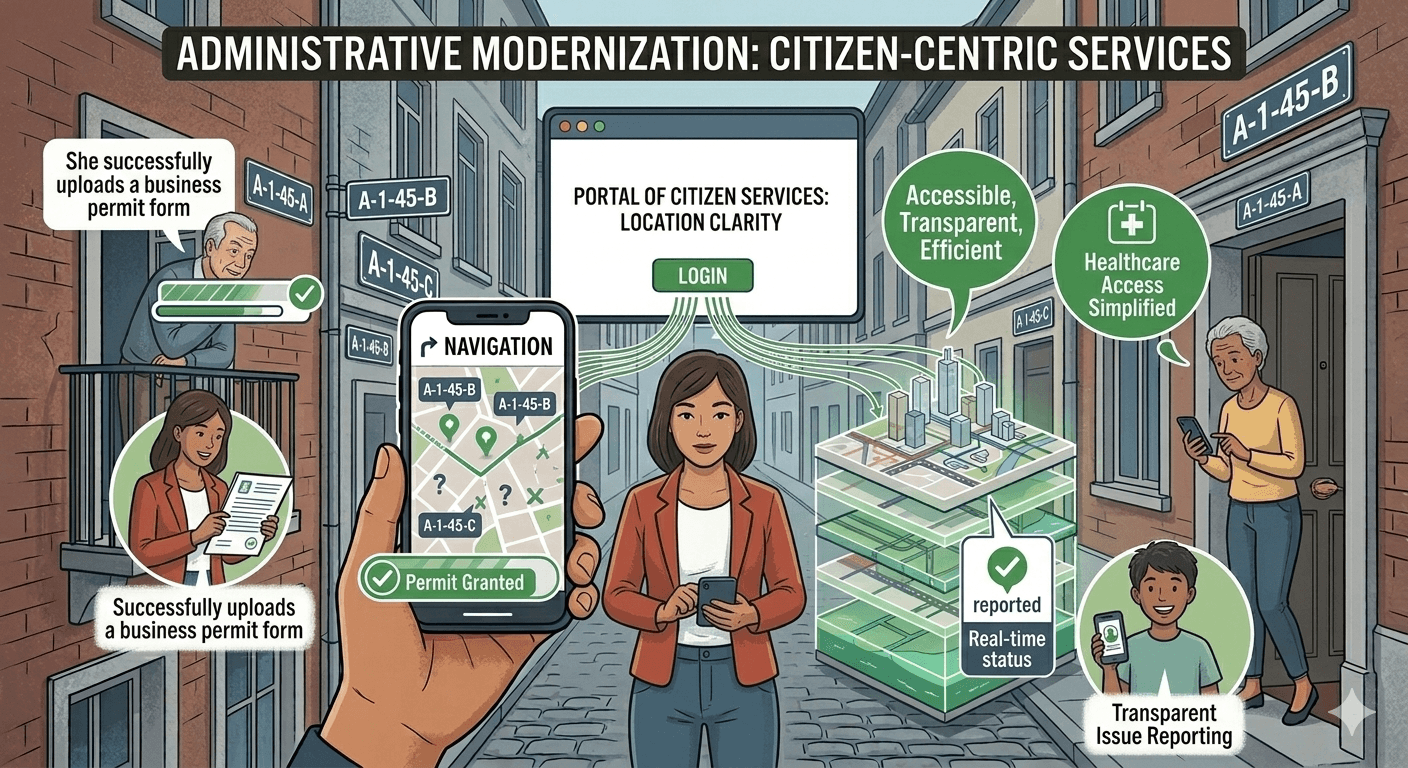
Administrative transformation begins not with portals, but with structured foundational systems—among them, addressing.
Introduction: Digital Portals Are Not Enough
Governments worldwide are digitizing services:
- Online tax filing
- E-visas
- E-permits
- Digital business registration
- Electronic health records
However, digital interfaces rely on structured underlying data.
Location clarity is one of the most critical layers.
Interoperability Across Agencies
Modern administrative systems depend on data exchange between:
- Tax authorities
- Social protection agencies
- Municipal governments
- Health ministries
- Emergency Response units
Without standardized location references, matching records across systems becomes error-prone.
The World Bank’s digital government guidance underscores the role of foundational registries in enabling interoperability.
Reducing Administrative Friction
Clear address systems reduce:
- Manual verification processes
- Duplicate records
- Disputes over jurisdiction
- Service delivery delays
Administrative efficiency improves when location data is structured and consistent.
Enabling Evidence-Based Policy
Policy decisions rely on geographic data to determine:
- Infrastructure investment
- Public service expansion
- Environmental risk mitigation
- Regional economic development
Location clarity strengthens evidence quality.
Trust and Transparency
When address systems are clear and publicly accessible:
Citizens can verify records
Disputes can be resolved transparently
Corruption risks decrease
Clarity enhances institutional trust.
Conclusion: Foundations Before Interfaces
Digitizing services without strengthening location infrastructure limits modernization efforts.
Administrative transformation begins not with portals, but with structured foundational systems—among them, addressing.